
Martin County Criminal Court Records
Martin County criminal court records are maintained through District Court and Court Administration. Minnesota District Court is the trial court for state criminal cases, and the official Martin County court page says the local District Court has original jurisdiction in criminal and traffic matters filed in the county. There is no separate county criminal court system for the court file. Once the prosecutor files a complaint, petition, citation, or other charging document, the case becomes part of the court record.
The criminal court record is broader than a charge list. It can show the complaint, probable-cause allegations, hearings, Rule 5 and Rule 8 events, omnibus hearings, contested omnibus or Rasmussen hearings, trial settings, pleas, sentencing, probation revocation, warrants, fines, fees, restitution, and dispositions by count. For a closer look at the arrest-to-charge path, use Martin County arrest records and court charges. For all case categories, use Martin County court records.
The Martin County Attorney page identifies the local prosecutor's role in adult crimes and juvenile offenses.
That office is the charging authority, while Court Administration keeps the filed court case record.
Search Martin County Criminal Cases
MCRO Case Search is the primary online search for public Martin County criminal court records. Search by case number when possible. Name searches can work for older or disposed cases, but MCRO has a special rule for pending criminal, traffic, and petty misdemeanor cases. If there is no conviction, a defendant-name search may not return the pending case. Dismissed and continued-for-dismissal matters are treated as pending for that name-search limit.
For background checks, the Minnesota Judicial Branch directs users to the Minnesota BCA Criminal History Search instead of MCRO. MCRO is a court-record view, not a criminal-history product. Certified copies must come from Court Administration. If the case involves federal prosecution, the record will be outside Martin County District Court and may be in federal court systems.
- Open MCRO Case Search and choose Case Number when a court file number is available.
- Use the Name tab for public name searches, but expect pending criminal limits.
- Select Criminal under case category and choose Martin County as the court location.
- Open the case detail and read charges, events, hearings, dispositions, and available documents.
- Contact Martin County Court Administration for certified copies or a record that is not remotely displayed.
Martin County Criminal Case Flow
Martin County's criminal prosecution process follows the same broad Minnesota District Court sequence described by the County Attorney. Misdemeanor cases generally move through arraignment, pretrial hearing, trial, and sentencing. Gross misdemeanor and felony cases generally move through first appearance or Rule 5, second appearance or Rule 8, omnibus or pretrial, contested omnibus or Rasmussen hearing when needed, trial, and sentencing.
Case flow: Charges Filed › Arraignment or First Appearance › Pretrial / Omnibus › Plea or Trial › Disposition › Sentencing
| Stage | What Happens in the Record |
|---|---|
| Charges Filed | The complaint, citation, petition, or other charging document opens the court case and lists the alleged offenses. |
| Arraignment / Rule 5 | The defendant is advised of charges, rights, release terms, and next hearing dates. |
| Rule 8 / Omnibus | Probable cause, evidence issues, motions, and pretrial questions are addressed. |
| Plea or Trial | The case may resolve by plea, trial verdict, dismissal, or other disposition. |
| Sentencing | The court enters jail, probation, fine, restitution, conditions, or other sentence terms when there is a conviction. |
The Martin County criminal prosecution process page supplies the local hearing sequence used for criminal court records.
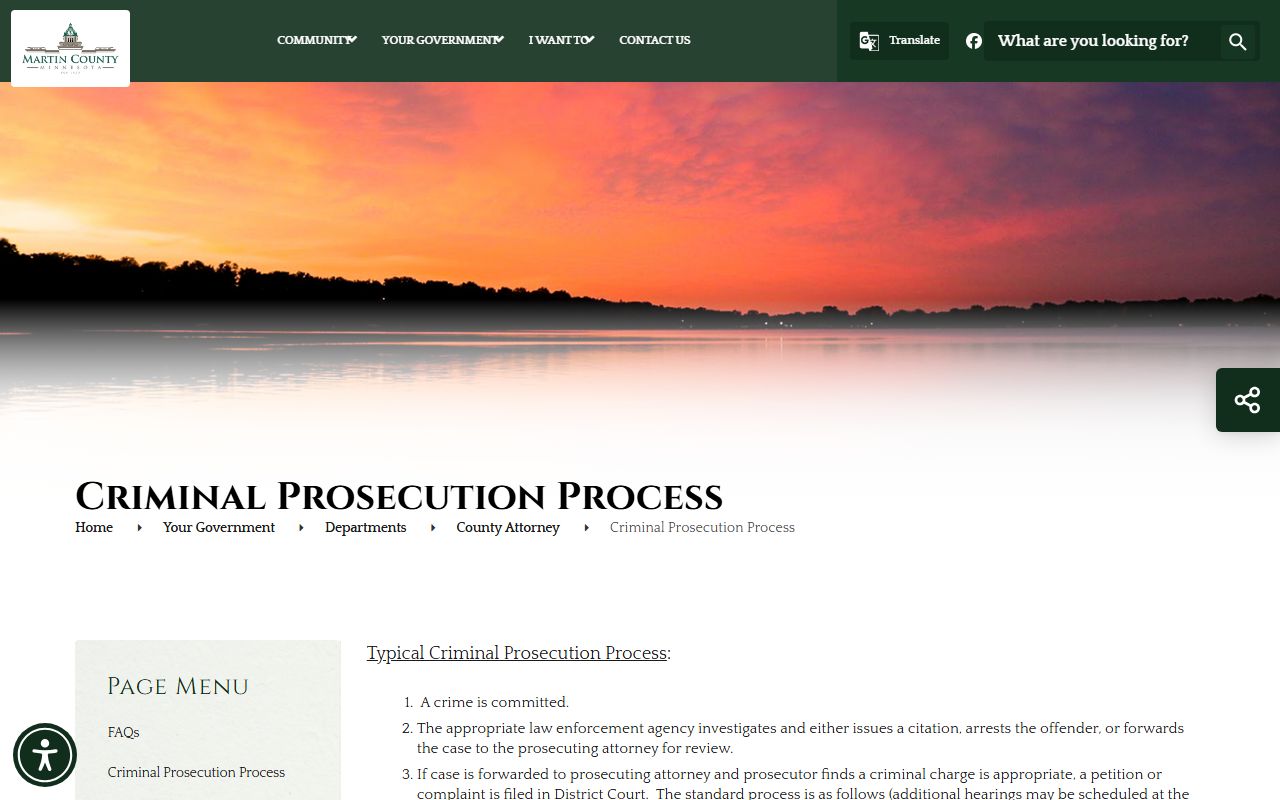
That sequence helps explain why a court record may show several hearings before a final outcome.
What Criminal Court Records Show
A Martin County criminal court record should be read count by count and event by event. One case can include several charges, and each charge can have a different status or disposition. A court record can also show warrants, bond, hearing dates, sentencing terms, probation events, and financial obligations. Some party names, street addresses, comments, and sensitive fields may be withheld from remote public access.
| Field | What It Shows |
|---|---|
| Case Number | The court file number assigned to the criminal case in Minnesota's court system. |
| Defendant and Attorneys | The public defendant name when available, prosecutor, defense counsel, and attorney roles. |
| Charges / Offenses | Offense title, statute, severity level, count number, and charge status. |
| Register of Actions | The chronological event log for filings, notices, hearings, orders, warrants, and dispositions. |
| Plea | The defendant's response to a charge, such as guilty or not guilty, when entered and public. |
| Disposition | The current or final outcome of a case or count, including guilty, dismissed, acquitted, or other outcome. |
| Sentence | Jail, probation, fines, fees, restitution, conditions, or revocation events after conviction. |
| Warrant Flag | An active warrant flag may appear, but MCRO warns it may or may not relate to the specific case being viewed. |
Charges vs Convictions
A charge is an accusation filed in court. A conviction is an adjudicated finding of guilt as defined by Minnesota law. Martin County criminal court records may show charges that were amended, reduced, dismissed, continued for dismissal, or resolved without a conviction. The distinction matters because MCRO's pending-case search rule uses the statutory conviction concept in Minnesota Statutes section 609.02.
| Point | Charge | Conviction |
|---|---|---|
| Meaning | Formal accusation that a crime was committed. | Court outcome showing adjudicated guilt. |
| Standard | Probable cause supports filing. | Proof beyond a reasonable doubt or valid guilty plea. |
| Record effect | Can remain visible even if later dismissed, unless restricted or sealed. | Can affect sentencing, probation, fines, and criminal history. |
| Search issue | Pending charges may not show by defendant-name search. | Convicted cases are less affected by the pending-name limit. |
Dispositions and Sentencing
Disposition means the current or final outcome of a case or charge. Sentencing is the penalty ordered after a conviction. In Martin County criminal court records, dispositions and sentences can appear in the Register of Actions, case details, charge list, orders, or sentencing documents. Common sentence fields can include jail time, probation, fines, fees, restitution, conditions, and revocation events.
Probation is part of the local court record when ordered. Martin County Probation supervises misdemeanor, gross misdemeanor, and juvenile matters and provides investigative reports and sentencing recommendations. Felony supervision may involve a separate state probation office in Fairmont. A probation violation can create new hearings, warrants, revocation events, or amended sentence terms in the criminal case file.
Sealed vs Expunged Records
Sealing blocks ordinary public access. Expungement is the common Minnesota term for that sealing remedy. The record is generally not destroyed, but it may no longer appear in MCRO and may be disclosed only under a court order or statutory authority. Minnesota Statutes chapter 609A and section 609A.02 set eligibility grounds for criminal-record expungement.
| Point | Sealed | Expunged |
|---|---|---|
| Public view | Hidden from ordinary public access. | Hidden from ordinary public access under expungement authority. |
| Record status | Record still exists but access is blocked. | Record generally still exists, but disclosure is limited. |
| Route | By law, court rule, or court order. | Automatic Clean Slate categories or petition under chapter 609A. |
| MCRO effect | May stop showing online. | May stop showing online after court and agency updates. |
Minnesota Judicial Branch criminal expungement help explains forms and process for criminal and juvenile delinquency expungement.
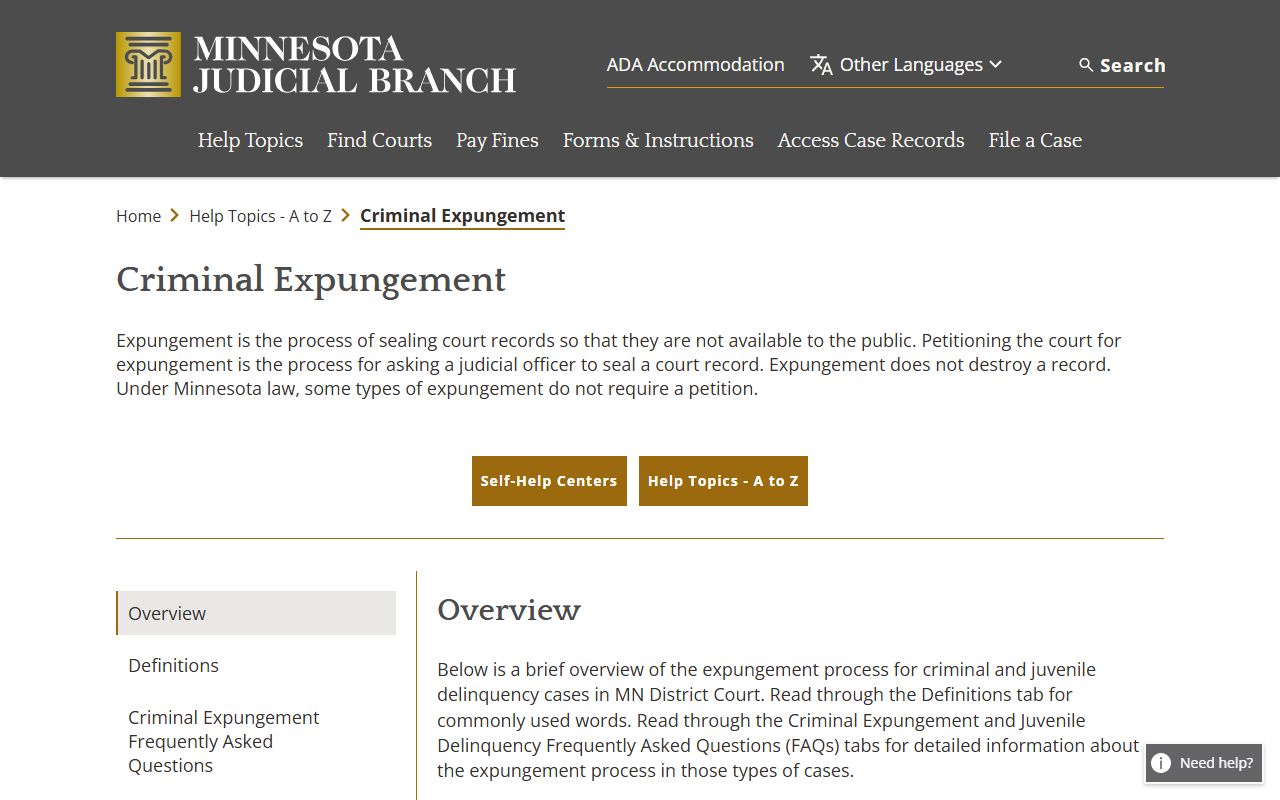
Expungement questions should be checked against the current case record and the current Minnesota court help materials.
Public Access to Criminal Records
Public access to Martin County criminal court records comes through MCRO, courthouse terminals, and Court Administration copy requests. The Minnesota Rules of Public Access to Records of the Judicial Branch control court-record access. Minnesota's Government Data Practices Act provides broader public-data context, but court records follow judiciary rules. Juvenile, sealed, expunged, civil commitment, and certain protected case types are restricted.
Criminal-history searches should be separated from criminal case-file searches. MCRO can show the public court file, but it is not a background-check system and does not certify results. The BCA route is the statewide criminal-history route, while Court Administration handles certified court copies and local case-file access.
Minnesota BCA Criminal History Search is the separate statewide criminal-history route for background-check style searches.
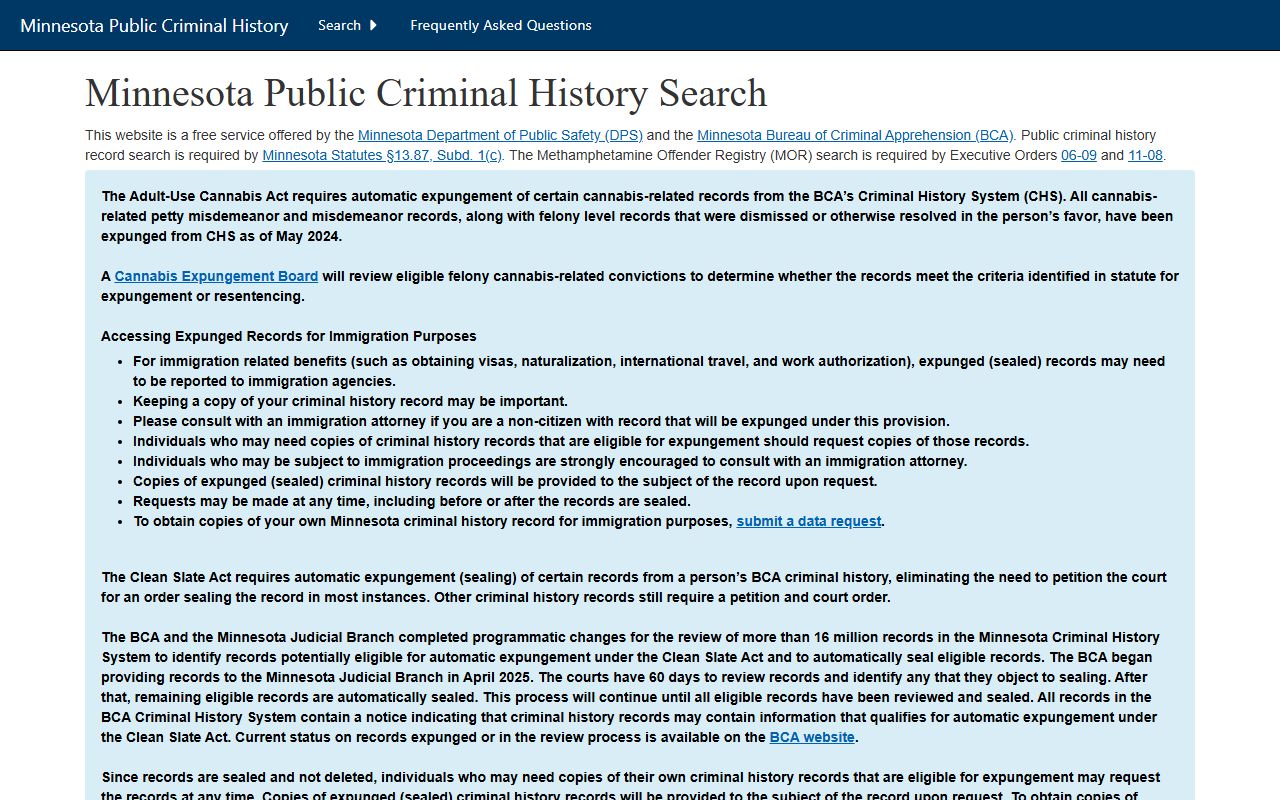
BCA criminal history and MCRO criminal case records answer related but different questions.
Note: MCRO is not a certified record source and is not the right tool for formal background checks.
Federal Criminal Case Limits
Federal prosecutions are not Martin County District Court records. A federal case tied to conduct in Minnesota may be handled by the U.S. Attorney's Office for the District of Minnesota and filed in federal court. Federal criminal dockets use federal systems, not MCRO. That distinction matters when a search involves federal charges, interstate investigations, federal custody, or appeals outside the Minnesota state court structure.
State charges filed by the Martin County Attorney remain in District Court, even when the conduct began with a local police citation, sheriff investigation, or jail booking.
The U.S. Attorney's Office for the District of Minnesota is the federal prosecutor for Minnesota.
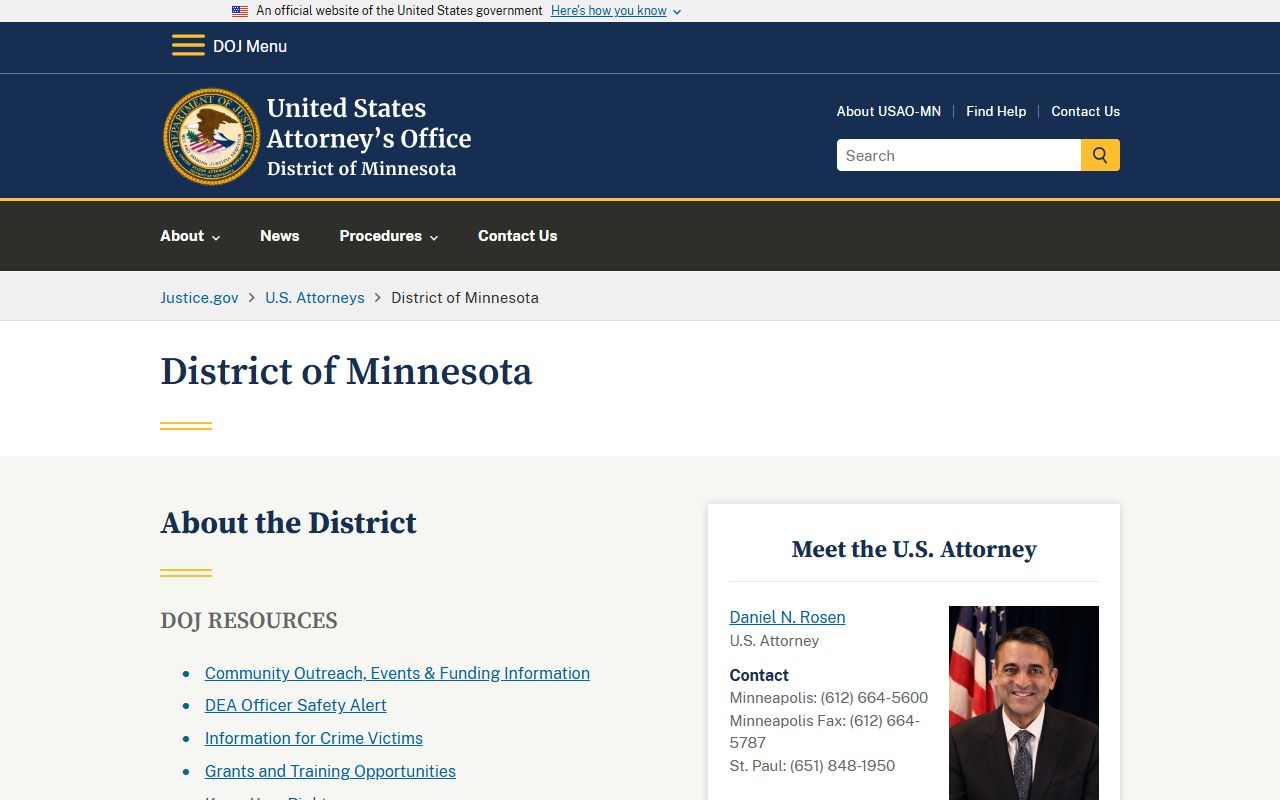
Use federal court tools for federal charges and Martin County District Court tools for state criminal cases.